
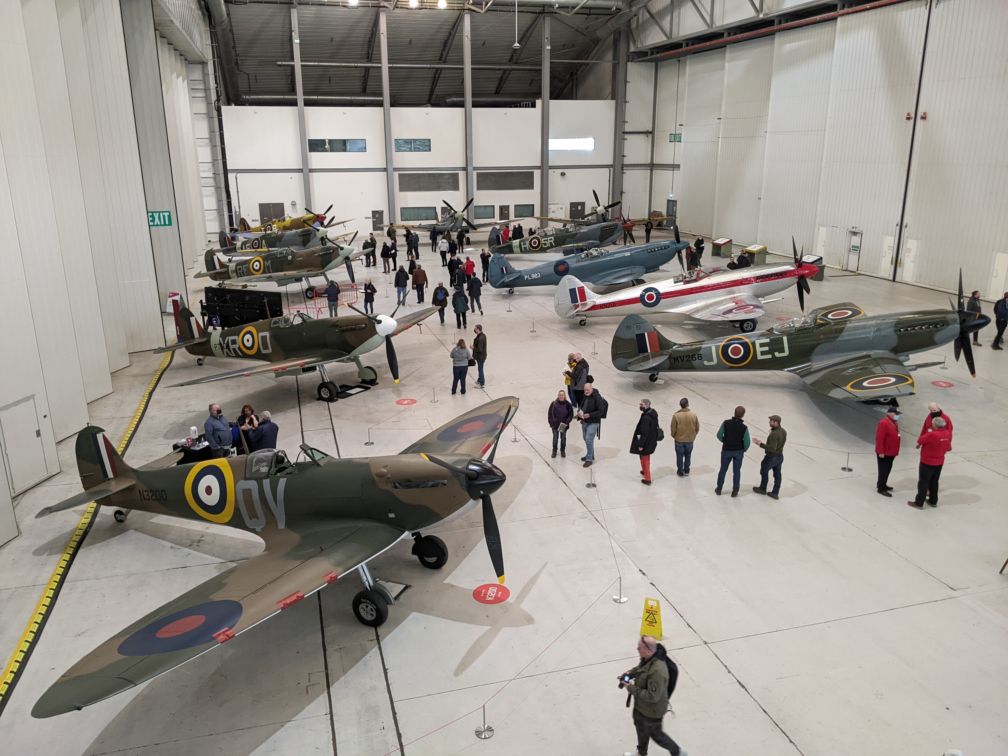
The Imperial War Museum has several satellite locations including the WWII airfield at Duxford, just outside Cambridge. For a limited time they had collected 11 airworthy Spitfires in the one place, a real once-in-a-lifetime opportunity. Only problem was getting there…
Of course these things are trivial with a car, but since I don’t run one and hiring was going to rapidly get expensive, car was not an option. Train then? That meant into London, then back out to Cambridge for a 4 hour journey that again was getting expensive and would mean arriving up at the museum at about the time I’d need to set off back home. So not an option. Eventually routed myself via National Express coaches, which were really cheap at £25 return in comparison to the other options. Only problem is that it is one coach a day so ultimately a few nights over in Cambridge Travelodge. But it did mean I could get a full unhurried day from 10am to 3pm at the museum which is needed - there is a lot there and some walking.
Arriving via some hops on the local buses for the 10am opening slot it was noticeable how the assembling visitors were mostly middle aged men. Occasional partners. And a school party. It did seem to get more balance as the day went on.
The Spitfire. Probably the most iconic and elegant fighter of WWII. Twelve planes in one hanger illustrating the evolution from the Mk I through to the Mk XIV and a Mk 22 in restoration. On hand were some enthusiastic volunteers, all too happy to engage in some geek-talk about their favorite topic. It was rather fun to give them a leading question and hear them answer.
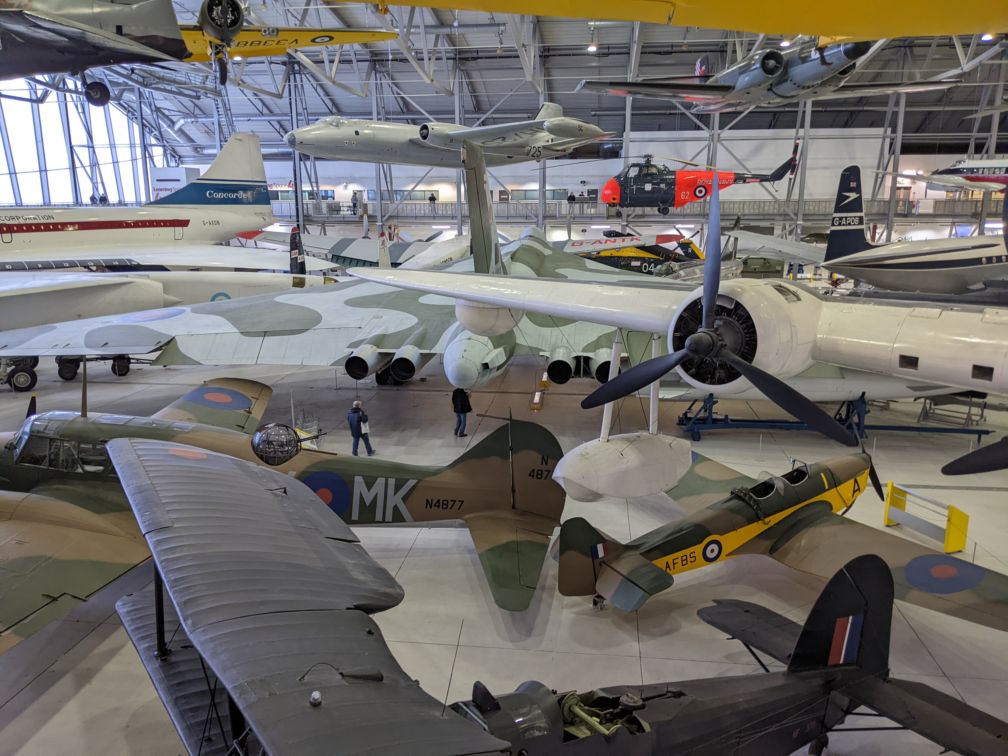
The permanent display is a packed hanger of significant aircraft from a Lancaster bomber to Concorde. ‘Packed’ isn’t really enough of an adjective. Planes had been installed jigsaw-like and strung from the ceiling like giant Airfix kits. Which considering that I’d probably built an Airfix kit at some point of most of the collected planes was rather apt. There are plenty of explanatory galleries around to show various aspects of aviation from how things fly to the roles aircraft fulfill as well as exhibits of engines and a Polaris missile.
The museums objective is “retold” : to make the stories of those who served continue on. Moving around the airfield there are other hangers and exhibits which focus not so much on the planes themselves but the experiences of those who flew and operated the airfield before, during and after WWII. It makes for a fresh perspective from displays listing an aircraft’s specifications.
Continue on and other hangers are focused on restoration efforts and the Cold War. An equally packed hanger is focused on the USAF who took over the airfield post-war. Somehow they have squeezed in the likes of a massive B52 and SR71 along with an A10, F15, mustang and a B17 among others. Finally there is a hanger focused on land-warfare which didn’t really work for me. Tanks and trucks are not my thing.
Some light refreshments and spending too much in the inevitable gift shop before hopping back on the buses to the Travelodge. A rather poor service at Nandos for the evening then a rather cold wait for the return coach next morning. So a lot of travel but a very worthwhile visit.